Home Care Services for Elderly Safety: A Comprehensive Guide
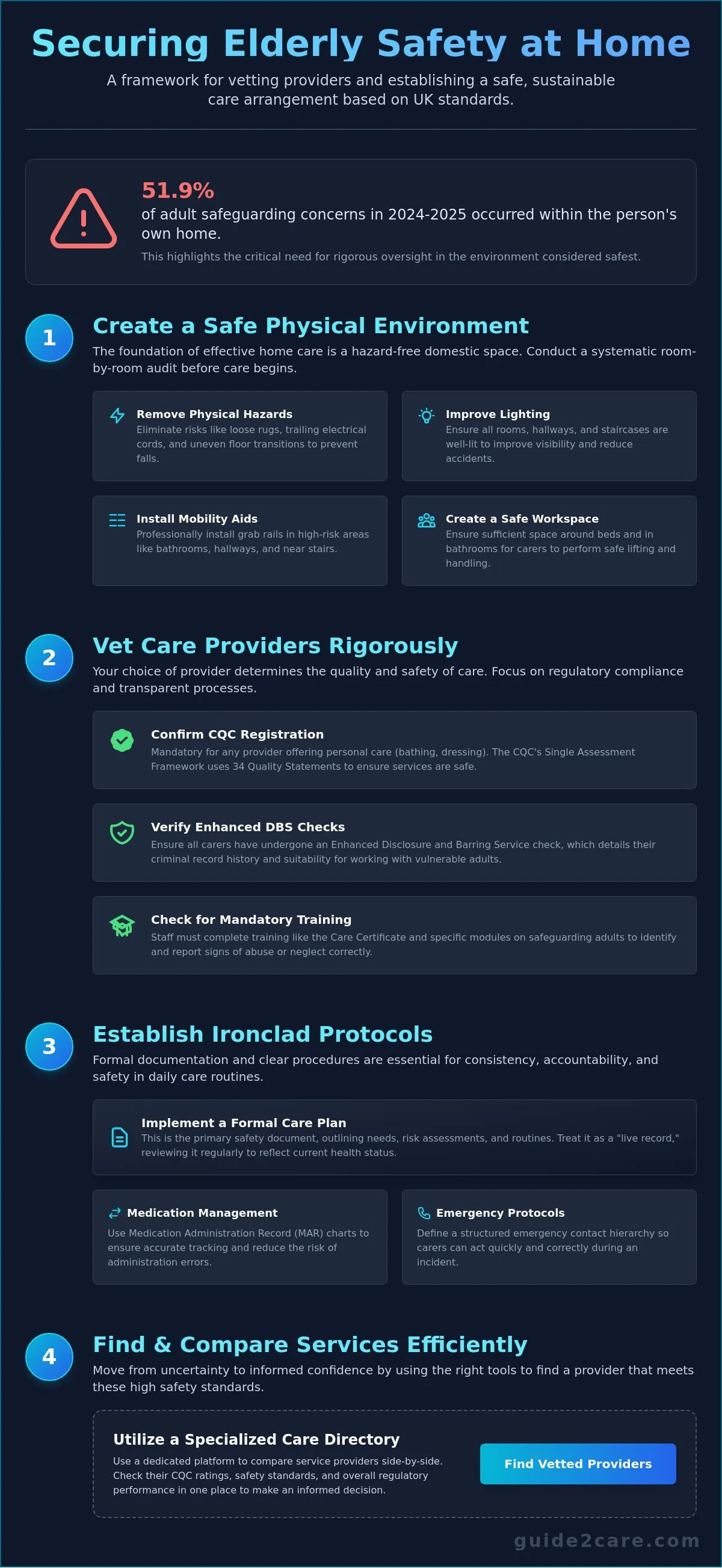
Did you know that 51.9% of abuse concerns for adults in 2024-2025 occurred within the person's own home? This data confirms that the environment you consider safest requires the most rigorous oversight. Selecting home care services for elderly safety is a complex task that involves more than just checking a provider's availability. It's a process of balancing physical home modifications with the careful vetting of professional staff.
You likely feel the pressure to make the right choice while managing fears about falls or neglect. This guide provides a direct framework to help you secure the living environment and evaluate care providers against UK safety standards. Learn how to interpret the CQC's 34 Quality Statements, verify Enhanced DBS checks, and conduct a thorough home safety audit. Use this information to move from a state of uncertainty to a position of informed confidence. We provide the structure you need to find a vetted provider and establish a safe, sustainable care arrangement for your relative.
Key Takeaways
- Conduct a comprehensive room-by-room audit to remove physical hazards like loose flooring and inadequate lighting before care begins.
- Research home care services for elderly safety by filtering for CQC-registered agencies that provide transparent recruitment and vetting data.
- Establish formal medication management protocols using MAR charts to ensure tracking accuracy and reduce the risk of administration errors.
- Define a structured emergency contact hierarchy to ensure carers act quickly and correctly during a domestic incident.
- Utilize specialized directories to compare service providers side-by-side based on their safety standards and regulatory performance.
Understanding the Role of Home Care in Elderly Safety
Home care safety is the active prevention of harm, injury, and neglect within a person's living environment. It requires a systematic approach to identifying risks before they lead to accidents. To understand the broad scope of these supports, research what is home care and how it differs from clinical settings.
Professional home care services for elderly safety focus on reducing specific domestic risks. Carers mitigate the chances of malnutrition, dehydration, and medication errors through scheduled monitoring. This structured approach moves beyond simple assistance to provide a protective framework for vulnerable adults. It ensures that basic needs don't become medical emergencies through consistent oversight.
For those looking to see how specialized agencies structure these safety-focused supports, you can learn more about the standards of non-medical in-home care from providers like Perfect Home Care, LLC.
To better understand the practical application of care aids in the home, watch this video:
A formal care plan serves as the primary safety document for any arrangement. It outlines specific needs, risk assessments, and daily routines. This document should be treated as a live record. Review it regularly to ensure it reflects the individual's current health status and any new risks identified by the care team. Use the care plan to hold providers accountable for the safety standards they promised.
The Impact of Professional Care on Fall Prevention
Carers provide essential support during mobility and transfers, significantly reducing the risk of fractures and head injuries. They monitor hydration and nutrition levels, which are critical for maintaining blood pressure and cognitive function. Professional observation allows for the early detection of physical decline or gait changes. Catching these signs early enables families to implement home modifications or increase support levels before an accident occurs.
Safeguarding Standards in the UK Care Sector
Safeguarding is the legal process of protecting an adult's right to live in safety, free from abuse and neglect. The CQC monitors these standards using the Single Assessment Framework, which was fully operational by 2026. This framework uses 34 Quality Statements to assess if services are safe and effective. UK carers must complete mandatory training, including the Care Certificate and specific modules on safeguarding adults. These requirements ensure that staff can identify signs of abuse and follow correct reporting procedures immediately.
Creating a Safe Physical Environment for Home Care
A safe domestic environment is the foundation of effective home care services for elderly safety. You must conduct a systematic room-by-room audit before any care package begins. This process identifies physical risks that often go unnoticed during daily routines. Data from 2024-2025 indicates that 51.9% of adult safeguarding concerns occur within the person's own home. This statistic highlights why a proactive approach to the physical environment is mandatory rather than optional.
Focus on identifying hidden hazards during your audit. Loose rugs, trailing electrical cords, and uneven floor transitions are primary causes of domestic accidents. Use a professional home safety checklist for seniors to ensure every area, from the attic to the cellar, is evaluated. Document every risk found and assign a timeline for its removal or repair.
Beyond structural hazards, ensure that essential utilities like heating are regularly inspected to prevent emergencies. For those in South West Scotland, Gas2Heat.com Ltd provides expert boiler installation and safety guidance to ensure the home remains warm and secure for vulnerable residents.
The home must also function as a safe workspace for professional carers. Ensure there's sufficient space around the bed and in the bathroom for safe lifting and handling. If a carer cannot move freely, the risk of injury to both the carer and your relative increases. Browse directory listings for care providers to find agencies that offer initial environmental assessments as part of their onboarding process.
Essential Home Modifications for Mobility
Install grab rails in high-risk areas like bathrooms and near entrance steps. These should be professionally fitted to ensure they can support full body weight. Evaluate all floor surfaces for slip resistance, especially in kitchens and hallways. If your home has multiple levels, consider a stairlift or permanent ramps. These modifications allow for safer movement and reduce the physical strain on both the individual and the care provider. Remove any furniture that obstructs direct walking paths between the bedroom, bathroom, and living area.
Improving Visibility and Access
Upgrade to high-wattage, non-glare lighting in all transition areas like hallways and stairs. Poor lighting is a major contributor to falls and medication errors. Ensure that essential items, such as telephones, glasses, and water, are always within easy reach. This prevents the need for overstretching or standing on unstable surfaces. Clear all clutter from floor levels and ensure that light switches are accessible at both the top and bottom of stairs. Motion-sensor lights are effective for nighttime safety, providing immediate illumination without the need to locate a switch in the dark.
Vetting Home Care Providers for Maximum Safety
Selecting home care services for elderly safety requires a rigorous evaluation of a provider’s operational standards. Start by verifying that the agency is registered with the Care Quality Commission (CQC) in England. Registration is a legal requirement for any provider delivering personal care. It ensures the agency is subject to regular inspections and must meet national safety regulations. Use a structured directory to filter providers by their latest inspection results and service categories.
Examine the agency’s recruitment and vetting protocols. Standard practice in 2026 involves advanced vetting that exceeds a basic Disclosure and Barring Service (DBS) check. Confirm that all staff have undergone an Enhanced DBS check with a Barred Lists check. For candidates who have lived outside the UK for 12 months or more in the last decade, an Overseas Police Check is also required. Ask the provider how they verify employment gaps and check references to ensure no history of misconduct is overlooked.
Review the specific training modules carers complete before entering a home. Safety in home care depends on specialized knowledge in dementia care and safe mobility assistance. Expert consultancy from Guardian Safety exemplifies the high level of safety training and professional auditing required to manage such specialized risks. Request evidence of their internal safety auditing processes. A reliable agency maintains a clear record of safety incidents and uses this data to improve care delivery. Given the 24.7% staff turnover rate in the social care sector, ask how the agency maintains consistent staffing. Regular carers are more likely to notice subtle changes in health or behavior that a rotating staff might miss.
Interpreting CQC Safety Ratings
A CQC rating of "Requires Improvement" in the "Safe" category indicates that the service is not consistently safe. It may highlight issues with medication management, staffing levels, or safeguarding procedures. Read the full inspection report to identify specific failures. An "Outstanding" rating for safety is a key differentiator. It demonstrates that the provider has innovative systems to manage risk and a proactive culture that prioritizes the prevention of harm. Focus your search on providers who consistently meet or exceed these regulatory benchmarks.
Questions to Ask Potential Care Agencies
Use these specific questions to evaluate an agency’s emergency readiness and accountability:
- "How do you handle a carer who is late or misses a shift?" A safe provider must have a contingency plan to ensure a vulnerable person is not left without essential support.
- "What is your protocol if a carer notices a new bruise or injury?" Look for a clear safeguarding procedure that involves immediate reporting to a manager and documentation in the care record.
- "How do you train staff for emergency first aid within a home?" Ensure carers are equipped to manage common domestic emergencies, such as choking or sudden falls, before professional medical help arrives.
Managing Medication and Emergency Protocols at Home
Safe medication management is a high-risk component of home care services for elderly safety. Errors in dosage or timing can lead to immediate medical complications. Implement a formal Medication Administration Record (MAR) chart to track every dose given. As of April 2026, the Adult Care Providers Handbook requires clear signatures on MAR sheets and specific protocols for the disposal of medication. Ensure your provider uses either a paper-based MAR or a Digital Social Care Record (DSCR) to maintain accuracy. Many professional agencies now use digital systems to provide real-time updates to family members.
Establish a clear emergency contact hierarchy. This document must be visible and accessible to every carer who enters the home. It should list the primary family contact, the GP, and any secondary emergency services. Keep medical information, including current prescriptions and Do Not Resuscitate (DNR) orders, in a centralized folder. This ensures that paramedics have immediate access to life-saving information during a crisis. You should review these contact details every three months to ensure they remain accurate.
Safe Medication Management Systems
Use blister packs or dosette boxes to organize pills by day and time. These systems reduce the risk of double-dosing or missed medication. Understand the legal difference between "prompting" and "administering" medication. Prompting involves reminding a person to take their medicine. Administering involves the carer physically handling and giving the dose. Professional carers must have specific training for administration tasks. Schedule a medication review with a GP at least once every six months to ensure prescriptions remain appropriate for the individual's current health status.
Assistive Technology and Safety Alarms
Bridge the gap between carer visits with technology. Evaluate personal alarm systems, such as wearable pendants, that provide 24/7 access to an emergency monitoring center. Install smart home sensors that detect falls or unusual periods of inactivity without invading privacy. Video doorbells are also effective tools to prevent doorstep scams and allow family members to monitor who is entering the property. The CQC aims for 80% of providers to use digital record solutions by late 2026, which allows for more responsive safety monitoring. To find agencies that utilize advanced digital monitoring and safety technology, search our directory of care providers today.
Finding and Comparing Safe Home Care Services in the UK
Locating the right home care services for elderly safety requires a methodical approach to comparison. You must move beyond general searches and use structured data to evaluate potential providers. A directory allows you to filter agencies by their specific safety records and geographical coverage. This ensures you only consider providers that meet the legal requirements for operating in your specific region of the UK. Use side-by-side comparison tools to evaluate how different agencies manage risk and report safety incidents.
Read independent reviews from other families to gain insights into a provider's daily safety performance. While regulatory ratings provide a baseline, family feedback often highlights practical details about carer punctuality and communication. Look for agencies that specialise in specific safety needs, such as dementia care or mobility support. These specialists often have more robust internal protocols for managing complex risks. Verify that any specialist claims are backed by specific staff training certifications and positive CQC assessment outcomes.
Using the Guide2Care Directory for Research
Search our comprehensive database to identify CQC-registered home care agencies in your area. Our platform organises information logically so you can find relevant data quickly. Filter your results by care type, such as live-in care or hourly domiciliary visits, to find the most appropriate safety expertise. Each listing provides direct access to the latest inspection summaries and agency contact details. Use these resources to create a shortlist of providers that demonstrate a high commitment to safety standards. This structured research phase reduces the friction of finding reliable information in a fragmented market.
Next Steps in Arranging Your Home Care
Follow this step-by-step process to move from research to a formal care arrangement:
- Request a care needs assessment: Contact your local authority to arrange a free assessment. This identifies the level of support required and provides a basis for your safety requirements.
- Shortlist three providers: Select three agencies from your directory research that meet your safety criteria.
- Conduct home interviews: Invite managers from these agencies to your home. Use this time to discuss your specific safety audit findings and ask the vetting questions outlined in previous sections.
- Finalise the care plan: Ensure the final contract includes clear risk mitigation strategies and defined safety goals.
Take the first step toward a secure home environment. Find safe, vetted home care providers in your area today and begin your comparison using our verified directory listings.
Take Control of Your Home Care Safety Strategy
You now have a practical framework to audit your domestic environment and evaluate care providers against national benchmarks. Establishing a safe home requires a combination of physical modifications, rigorous staff vetting, and structured medication management. By following these steps, you reduce the risks of accidents and neglect while ensuring a higher standard of daily oversight. It's essential to move beyond general assumptions and use verified data to make your final selection.
Selecting home care services for elderly safety is more efficient when you have access to organized information. Our platform provides a comprehensive UK-wide directory that includes links to the latest CQC safety ratings. You can also access expert guides designed to simplify the process of choosing quality care. This resource allows you to compare multiple agencies side-by-side using objective criteria rather than marketing claims.
Use these tools to move forward with clarity and confidence. Find and compare safe home care providers in your local area to establish a secure and sustainable environment for your relative. Proactive planning is the most effective way to ensure long-term safety and peace of mind at home.
Frequently Asked Questions
What is the most important safety feature in a home for an elderly person?
High-quality lighting and clear walkways are the most critical safety features in any domestic setting. These prevent falls, which remain a primary cause of domestic injuries for seniors. Install motion-sensor lights in hallways and remove all loose rugs or trailing cables. Ensure that frequently used items are stored at waist height to prevent overbalancing. These simple physical changes create a stable environment for home care services for elderly safety to operate effectively.
Are all home care workers in the UK background checked?
All carers working for a CQC-registered agency must undergo an Enhanced Disclosure and Barring Service (DBS) check. This process includes a search of the Barred Lists to ensure the individual is not prohibited from working with vulnerable adults. If you hire a private carer independently, you're responsible for conducting these checks yourself. Always verify the date of the certificate and ensure it's kept up to date through the DBS Update Service.
What should I do if I am worried about the safety of the care being provided?
Speak with the registered manager of the care agency immediately to raise your concerns. Every regulated provider must have a formal complaints procedure that they're legally required to follow. If the issue involves potential abuse or serious neglect, contact your local authority's adult safeguarding team. You can also provide feedback to the CQC. They use your information to inform their next inspection and monitor the provider's safety standards.
Can a home care service help with profound mobility issues safely?
Professional home care services for elderly safety can manage profound mobility issues using specialist equipment like hoists and standing aids. The provider must conduct a specific moving and handling risk assessment before care begins. This ensures two carers are present if the task requires it for safety. Confirm that all staff have completed practical training in the specific equipment used in your relative's home to prevent lifting injuries.
How often should a home safety risk assessment be updated?
Update your home safety risk assessment at least every six months to account for changes in health or mobility. You should also trigger an immediate review if the individual experiences a fall, a hospital admission, or a change in medication. Regular reviews ensure that the care plan remains aligned with current risks. Document every update in the formal care record to maintain a clear safety history for all visiting staff and family members.
What is the difference between a private carer and a care agency regarding safety?
Care agencies are regulated by the CQC and take responsibility for staff vetting, training, and public liability insurance. This provides a structured safety net and a formal path for complaints. Private carers are often self-employed, meaning the family becomes the employer. In this scenario, you must manage your own safety audits, verify DBS checks, and ensure the carer has appropriate insurance. Agencies offer more organizational oversight and provide backup staffing if a carer is unwell.
How do I report a safety concern about a UK care provider?
Report a safety concern by contacting the local council's adult social care department. They have a legal duty to investigate safeguarding alerts. You should also notify the Care Quality Commission (CQC) through their online "Give feedback on care" form. While the CQC doesn't resolve individual disputes, your report helps them identify patterns of poor practice across the agency. For immediate danger or criminal activity, contact the police directly.
Does the CQC check every home care visit for safety?
The CQC doesn't monitor every individual care visit. Instead, they inspect the agency's management systems, staff training records, and recruitment processes. They also speak with a sample of service users and their families to gauge the quality of care. These inspections happen periodically based on the provider's previous rating and risk profile. You can check the results of these inspections on the CQC website or through our directory listings to verify a provider's safety history.