Marketing Strategies for Care Homes 2026: The Complete Growth Guide
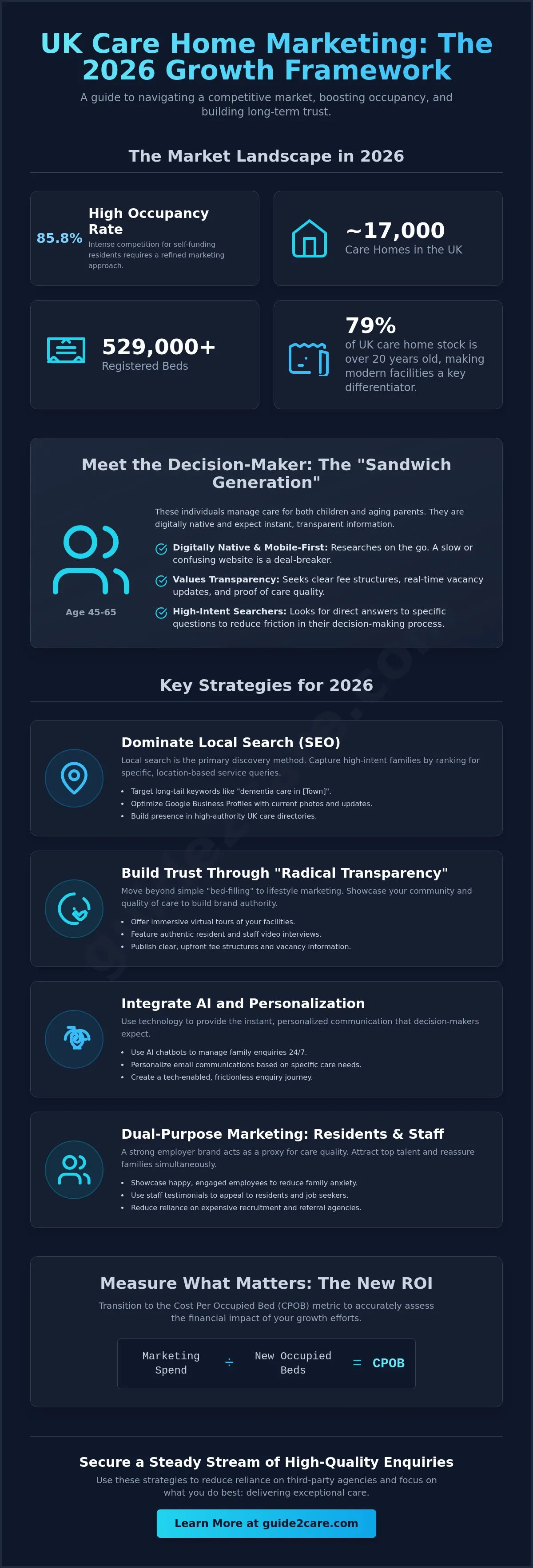
With 85.8% of UK care home beds occupied as of February 2026, the competition for self-funding residents is increasingly intense. You likely face high acquisition costs and growing pressure from large care groups that dominate the local market. Reaching the "sandwich generation" decision-makers requires a precise approach that cuts through the noise. Implementing updated marketing strategies for care homes 2026 is the most reliable way to generate high-quality enquiries and reduce your reliance on expensive agency referrals.
This guide provides a functional framework to master the digital and local tactics necessary for growth. You'll learn how to use hyperlocal SEO, transparent pricing, and authentic resident testimonials to build brand authority. We'll also explain how to leverage directory listings and advertising partnerships to reach families directly. Follow these steps to improve your occupancy rates and create a transparent, tech-enabled ecosystem that serves both your residents and your business objectives. Use this resource to simplify your marketing process and focus on delivering high-quality care.
Key Takeaways
- Optimize your local presence through high-authority UK directories to capture high-intent traffic from families.
- Adopt "Radical Transparency" standards by using virtual tours and resident interviews to build brand authority.
- Integrate AI tools to manage family enquiries 24/7 and personalize email communications based on specific care needs.
- Transition to the Cost Per Occupied Bed (CPOB) metric to accurately assess the financial impact of your growth efforts.
- Use these updated marketing strategies for care homes 2026 to secure a steady stream of enquiries and reduce reliance on third-party agencies.
The Evolution of Care Home Marketing in 2026
The UK care sector is undergoing a structural shift. As of April 2026, there are nearly 17,000 care homes managing over 529,000 registered beds. Occupancy rates reached 85.8% in February 2026. This creates a competitive environment where providers must refine their outreach. Success requires moving away from simple "bed-filling" tactics toward comprehensive digital marketing strategies that build long-term trust.
Effective marketing strategies for care homes 2026 now prioritize relationship-based "lifestyle marketing." Families don't look for just a room; they seek a community that aligns with their values. This transition demands a focus on transparency and data-driven proof of care quality. With 79% of UK care home stock being over 20 years old, providers with modern or purpose-built facilities must highlight these assets to stand out. Use your brand to project an image of an efficient, organized, and reliable facilitator.
To better understand this concept, watch this helpful video:
Targeting the Digitally Native Decision-Maker
The primary decision-maker in 2026 is the "Sandwich Generation." These individuals are typically aged 45 to 65 and manage care for both children and aging parents. They're digitally native and expect instant access to information. Ensure your website is mobile-first. This demographic often researches during work breaks or commute times. They value transparent data, such as real-time vacancy updates and clear fee structures. Provide direct answers to their questions to reduce friction in the enquiry journey. If your site is slow or difficult to navigate, you'll lose these high-intent leads to larger care groups. Focus on providing clarity and comprehensiveness to build immediate trust.
Dual-Purpose Marketing: Residents and Recruitment
Marketing in 2026 serves a dual function. It must attract self-funding residents while simultaneously acting as an employer branding tool. The UK care workforce stands at 787,992 people, and competition for skilled staff is high. A strong brand culture serves as a proxy for care quality. When families see happy, engaged employees, their anxiety about safety and staffing levels decreases. Social proof is essential here. Use staff testimonials and "behind-the-scenes" content to appeal to both prospective residents and job seekers. This integrated approach lowers the cost of acquisition for both categories. It also reduces reliance on external agencies by building an internal pipeline of talent.
Showcase your staff culture as a core component of your service offering. Addressing the staffing crisis through your brand identity is a key differentiator in 2026. Nearly one in five UK care homes are currently rated as ‘Requires Improvement’ or ‘Inadequate’. Use your marketing materials to address these regulatory perceptions directly. Provide evidence of safety, staffing levels, and resident satisfaction to mitigate concerns. Your goal is to simplify the search process for families by presenting information clearly and directly. This methodical approach ensures that answers can be found with minimal friction.
Dominating Local Search: SEO and Directory Optimization
Local search is the primary discovery method for care services in 2026. Most families begin their search online using location-specific queries. With 10,521 UK homes specifically serving those aged 65 and over, standing out in local results is vital. To succeed, your marketing strategies for care homes 2026 must prioritize local visibility over broad national rankings. Focus on capturing users at the top of the senior living community sales funnel. It's the most efficient way to generate enquiries.
Move your keyword strategy beyond the generic term "care home." Prospective residents and their families now search for specific service types. Use phrases such as "dementia care in [Town]" or "respite beds available in [County]." This approach targets high-intent leads who are closer to making a decision. For multi-site operators, manage individual Google Business Profiles for every home. Ensure each profile features current photos, accurate contact details, and regular updates on available facilities.
Optimising for "Care Near Me" and Local Intent
Dominating the Google Map Pack is essential for capturing local traffic. Local intent for care providers is the specific search behavior of users looking for immediate placement options within a defined geographic radius. Create location-specific landing pages on your main website to rank higher. Each page must contain unique content, including local staff names, specific facility features, and directions from nearby landmarks. Don't use identical descriptions across multiple sites. This practice dilutes your search authority and confuses potential residents.
Leveraging Directories for Instant Visibility
High-authority UK directories often outrank individual care home websites in search results. These platforms provide a structured way for families to compare options quickly. Use directory listings for care providers to gain instant visibility in crowded local markets. Complete your profile with professional photography and a comprehensive list of services. Place clear calls-to-action that lead directly to your enquiry form or phone number. It's a simple way to increase your reach without complex technical overhead.
Manage your directory presence with the same level of detail as your own website. Update your service lists to reflect current availability and care specialisms. Encourage families to leave reviews on these platforms. Positive feedback on a third-party directory builds cross-platform authority and provides the social proof necessary to reduce family anxiety. This methodical approach ensures your home remains visible exactly when and where families are searching.
Building Radical Transparency Through Content
Radical transparency is the operational standard for care providers in 2026. Families no longer accept vague marketing claims or gated information. They require direct access to data, pricing, and daily operational realities before booking a visit. To implement effective marketing strategies for care homes 2026, you must eliminate the "anxiety gap" by providing comprehensive information upfront. This approach builds immediate trust and filters for high-intent enquiries.
Establish your authority through educational content pillars. Create guides that explain complex topics such as dementia care transitions or local funding structures. While 10,521 UK homes serve those over 65, few provide the clarity needed to navigate the system easily. By simplifying these processes, you position your home as a reliable resource rather than just a service provider. Integrate your CQC ratings directly into your narrative. With nearly one in five UK care homes currently rated as 'Requires Improvement' or 'Inadequate', being honest about your status and your improvement plans is essential for credibility.
Video Marketing: Bringing the Home to the Family
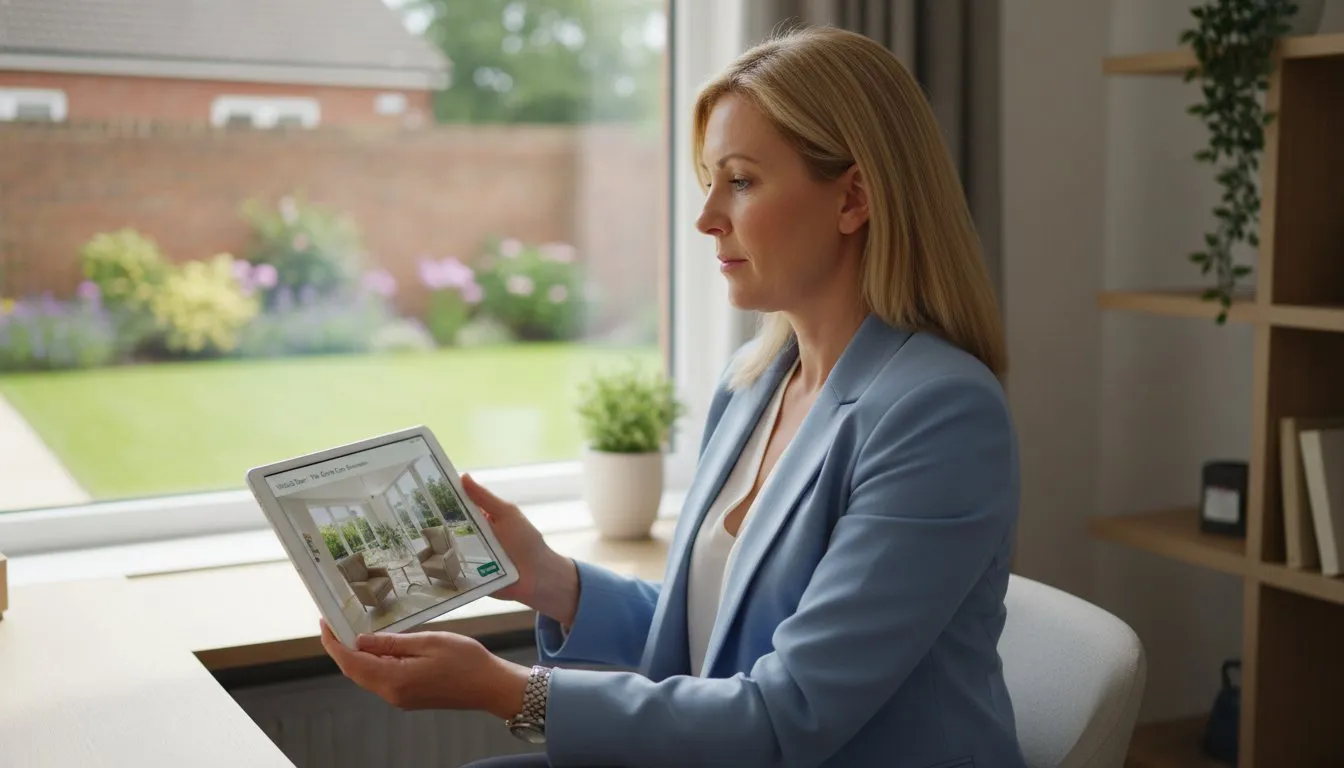
Video is the most efficient tool for reducing friction during the search process. Use 360-degree virtual tours to allow families to explore your facilities from their mobile devices. This technology manages expectations and ensures that physical visits are more likely to result in a move-in. Supplement these tours with "day in the life" clips and resident interviews to showcase the vibrancy of your community. Short-form videos on platforms like TikTok or Instagram Reels are effective for highlighting staff culture and resident activities. Ensure your internal videos have stable framing and clear audio. These technical details reflect the professional standards of your care.
Managing Digital Reputation and Social Proof
Social proof serves as a critical trust signal for the "Sandwich Generation" decision-makers. Implement a systematic process for gathering honest reviews from residents and their families. Don't fear detailed feedback. Respond to every review with a neutral and helpful tone. Address specific concerns directly and state the actions you've taken to resolve issues. This methodical response style demonstrates accountability. Showcase your awards and industry accreditations prominently. These external validations act as objective proof of quality in a market where 85.8% of beds are already occupied. Your digital reputation must reflect the same level of organization found in your physical care environment.
Integrating AI and Personalisation into the Enquiry Journey
AI technology is now a functional requirement for managing the enquiry funnel. Use AI chatbots to provide 24/7 support for anxious families who research options outside of standard business hours. These tools answer basic questions about facilities and availability without requiring immediate staff intervention. Integrating these tools into your marketing strategies for care homes 2026 ensures you capture leads that might otherwise be lost to more responsive competitors. It's a practical way to manage the initial high-volume stage of the sales funnel.
Apply AI to segment your email marketing campaigns based on specific care requirements. Categorize leads into groups such as respite, dementia, or nursing care to ensure every communication is relevant. This methodical approach prevents information overload for families and improves enquiry-to-visit conversion rates. Use predictive analytics to identify occupancy dips before they become critical. If your current occupancy is trending below the 85.8% national average reported in February 2026, use automated triggers to increase your advertising budget on high-intent platforms. This data-driven strategy ensures your marketing spend is always aligned with your actual capacity.
Automate your follow-up process using a CRM to ensure no enquiry is lost. Set up sequences that trigger based on user actions, such as downloading a brochure or viewing a specific care page. These systems maintain momentum in the decision-making process while your team focuses on delivering care. Consistent, automated follow-ups reduce the time between the first enquiry and the physical tour. It's an efficient method to build a reliable pipeline of prospective residents.
Lead Nurturing with AI-Driven Communication
Implement intelligent auto-responders that can answer specific questions about your home's facilities or local area. Use CRM data to send personalised content to families who are in the "consideration" phase of their search. For example, send a video tour of your dementia wing only to those who have expressed interest in that specific service. Balance this AI efficiency with a clear transition to a human care manager for complex emotional discussions. This structure ensures that families feel supported by technology without losing the personal connection essential in the care sector.
Personalising the On-Site Experience
Use dynamic website content that changes based on a user's previous search history or location. If a visitor previously viewed your respite care pages, ensure your homepage highlights respite availability upon their return. Tailor the "Book a Tour" journey by asking for the specific care type required at the start of the form. This allows you to prepare a bespoke tour that addresses their exact needs. Providing a personalised digital journey directly increases your website conversion rates and lead quality. Secure an advertising partnership to place your care home in front of families using these advanced search and comparison tools.
Measuring ROI and Scaling Your 2026 Strategy
Measuring success is the final step in implementing marketing strategies for care homes 2026. Use the Cost Per Occupied Bed (CPOB) as your primary financial metric. This figure calculates the total marketing spend required to move one resident into a room. It provides a clearer picture of profitability than simple enquiry volume. By focusing on CPOB, you can identify which channels deliver the highest quality leads at the lowest cost. It's a functional way to ensure your budget is used efficiently.
Families rarely make a decision after a single interaction. They follow a multi-touch journey that often begins with a directory search and ends with a physical visit. A user might discover your facility on a comparison platform, visit your website to watch a 360-degree tour, and then read reviews before calling. Track these "assisted conversions" to understand how different platforms contribute to the final move-in. This data allows you to allocate your budget accurately across various touchpoints.
Balance your spending between "Always On" SEO and "Tactical" advertising. SEO is a long-term investment that builds organic authority and reduces your cost-per-lead over time. In contrast, tactical advertising partnerships allow you to fill sudden vacancies quickly. If your occupancy drops below the national average of 85.8%, increase your tactical spend to generate immediate enquiries. This dual-track approach ensures both stability and flexibility in your growth strategy.
Key Performance Indicators for Care Managers
Monitor your enquiry-to-tour and tour-to-admission ratios to identify bottlenecks in your funnel. A high volume of enquiries with low tour numbers suggests a mismatch in expectations or a slow follow-up process. Track the average time-to-conversion separately for self-funders and local authority placements. Self-funders typically require a longer "consideration" phase and more personalised content. Use your CRM to identify which directory listings are assisting these conversions. This level of detail helps you scale your most effective outreach methods.
Partnering with Guide2Care for Growth
Premium directory listings provide a high-ROI lead channel in a crowded UK market. These listings increase your visibility exactly when families are comparing options. Use these platforms to host your transparent pricing and facility data, which helps educate families and shortens the sales cycle. By providing all necessary information upfront, you receive enquiries from leads who are already well-informed and ready to tour. This methodical approach reduces the administrative burden on your staff. Enhance your visibility by listing your care home on Guide2Care today to secure your occupancy for the remainder of 2026.
Securing Your Occupancy Goals in 2026
Success in the current market requires a shift toward radical transparency and technological integration. You've learned how to dominate local search through directory optimization and how to use AI to manage the enquiry funnel effectively. These marketing strategies for care homes 2026 provide a functional roadmap to move beyond simple occupancy filling. Focus on building a trusted brand that serves the specific needs of modern decision-makers through clear, data-driven content. Use these tools to simplify the search process for families and present your care services with total clarity.
Visibility on trusted platforms is the most efficient way to capture high-intent leads. Guide2Care serves as a comprehensive UK-wide care directory and a trusted resource for families seeking guidance. By positioning your facility where care seekers are already searching, you shorten the sales cycle and improve your return on investment. Take the next step in your growth plan today. List your care service on Guide2Care to reach thousands of UK families. Implementing these systems now ensures your home remains a reliable and visible choice for families throughout the year.
Frequently Asked Questions
What is the most effective marketing channel for care homes in 2026?
Local search and high-authority directory listings remain the most effective channels for care providers. Families typically start their journey with location-based queries on major search engines to find nearby options. Dominating the Google Map Pack and maintaining high-quality directory profiles ensures you appear exactly where families are looking. These platforms provide the structured data and social proof necessary to drive high-intent enquiries while reducing reliance on expensive agency referrals.
How can AI improve the lead generation process for nursing homes?
AI chatbots manage initial enquiries 24/7 to ensure no lead is lost during out-of-office hours. These tools provide immediate answers to common questions about facilities or care types. AI-driven CRM systems also segment leads based on specific needs like respite or nursing care. This automation allows your team to focus their time on conducting tours and building personal relationships with prospective residents, which are critical for high-quality placements.
Why are directory listings important for local SEO in the care sector?
High-authority directories often outrank individual care home websites in local search results for general queries. They provide a consolidated view of options that search engines prioritize for broad searches like "care homes near me." Listing your facility on these platforms improves your local SEO by providing high-quality backlinks and consistent contact data. It's a functional way to increase your digital footprint and reach families who are actively comparing providers.
How do we reach self-funding families specifically?
Reach self-funding families by highlighting lifestyle amenities and professional care standards through targeted marketing strategies for care homes 2026. This demographic values transparency and high-quality facility data. Focus your digital outreach on the 45 to 65 age bracket, as they are the primary decision-makers for their parents. Providing clear, upfront information about your services and available facilities builds the trust required for this group to book a physical tour.
What content should be included in a care home marketing plan?
Include virtual tours, educational guides, and staff culture highlights in your comprehensive marketing plan. Families need resources that explain the transition into care and the specific specialisms you offer, such as dementia or respite care. Use video content to showcase the vibrancy of your home and the professionalism of your team. This content should address common anxieties and provide clear evidence of your home's quality and safety standards.
How can we use social media without compromising resident privacy?
Focus on staff-led content and "behind-the-scenes" clips that showcase your home's atmosphere. If you include residents, always secure explicit, written consent for every piece of media used. Many providers choose to highlight communal activities or garden spaces where residents aren't the primary focus. This approach maintains a sense of community vibrancy while strictly adhering to privacy requirements. It's an efficient way to show your home's culture without compromising resident safety.
What are the key CQC requirements for care home advertising?
Care home advertising must comply with the UK Code of Non-Broadcast Advertising (the CAP Code). All promotional claims must be legal, decent, honest, and truthful. You must hold robust evidence for any statements regarding care quality, staffing levels, or specific facilities. Ensure your current CQC rating is displayed clearly if it's mentioned in your marketing narrative. Don't use misleading pricing structures or omit essential information about additional fees in your digital materials.
How much should a care home spend on digital marketing per year?
Budget allocation should be based on your specific occupancy targets and local competition levels. Rather than a fixed annual sum, focus on the cost required to move a resident into a bed. Some industry professionals suggest a mix of organic SEO and tactical advertising for sudden vacancies. Monitor your lead quality from different sources to ensure your budget is prioritized toward the channels with the highest conversion rates.