Attracting Self-Funding Residents: A Strategic Guide for UK Care Providers (2026)

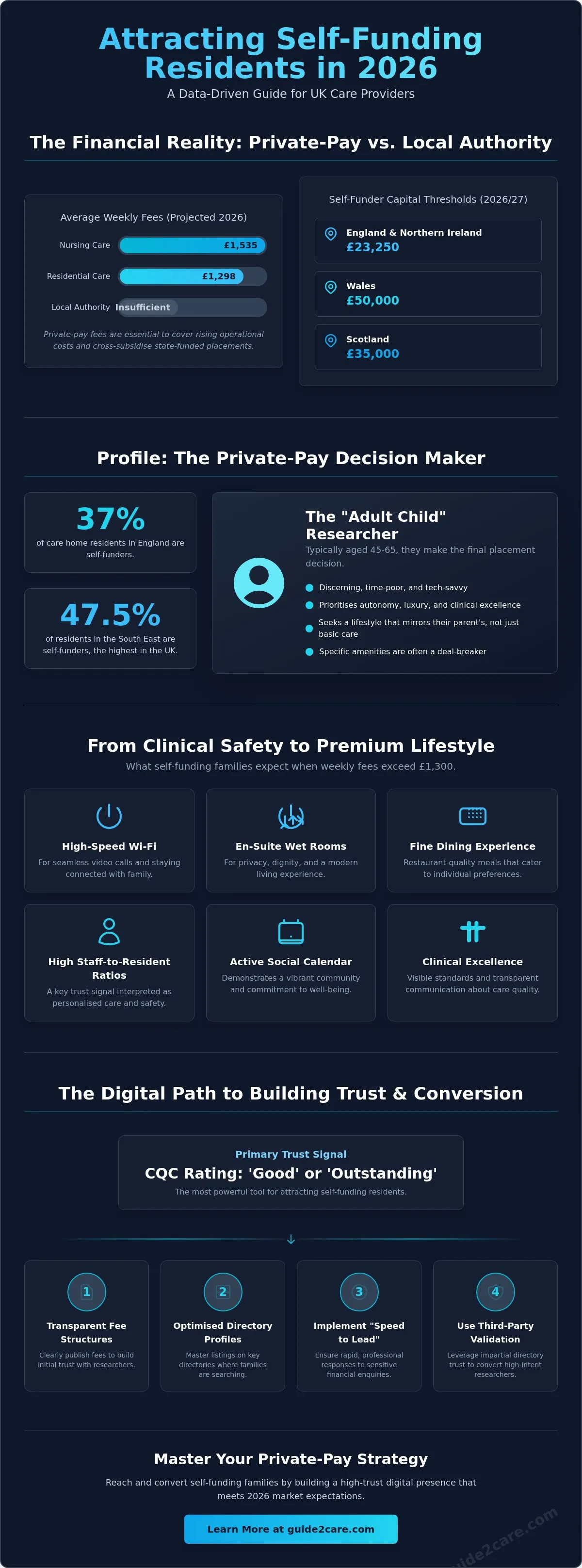
With the average weekly cost for a self-funded nursing home reaching £1,535 in 2026, the competition for private-pay residents has moved far beyond local reputation. Relying on traditional referrals isn't enough to maintain a sustainable occupancy mix. Attracting self-funding residents now requires a precise, high-trust digital presence that speaks directly to families managing assets above the £23,250 threshold. You know that local authority fee rates often fail to cover the true cost of high-quality care. This creates an urgent need for a robust private-pay strategy.
Master the strategies to reach and convert self-funding families by aligning your care service with 2026 market expectations and digital standards. This guide simplifies the process of evidencing quality under the CQC Single Assessment Framework. It provides a clear path to building a transparent reputation through strategic directory listings and advertising. Follow this methodical approach to move from selling beds to curating a service that discerning families choose with confidence. We examine the specific metrics and communication styles that drive private placements in the current UK market.
Key Takeaways
- Identify the financial disparity between local authority rates and private-pay fees to build a sustainable 2026 occupancy model.
- Align your service offering with high-value amenities and CQC quality statements to meet the specific expectations of self-funding families.
- Optimise your digital presence by mastering the strategies for attracting self-funding residents through transparent fee structures and high-converting directory profiles.
- Implement a "Speed to Lead" protocol to ensure rapid response times and professional handling of sensitive financial enquiries.
- Use third-party directory validation to establish the impartial trust and authority required to convert high-intent researchers into residents.
The Economic Case for Attracting Self-Funding Residents in 2026
A self-funder is defined as any individual with assets exceeding the Upper Capital Limit (UCL). For the 2026/27 financial year, this threshold is £23,250 in England and Northern Ireland, £50,000 in Wales, and £35,000 in Scotland. Anyone with assets above these limits must pay the full cost of their care. This creates a sharp financial disparity. Local authority rates are often fixed at levels that barely cover basic operational costs. In contrast, average weekly self-funded rates for residential care have reached £1,298, while nursing care averages £1,535. These figures demonstrate why the private market is the primary driver of revenue for modern providers.
Attracting self-funding residents is now a fundamental requirement for long-term facility sustainability. Relying solely on local authority placements leaves a provider vulnerable to frozen budgets and rising operational inflation. A balanced resident mix allows for continuous reinvestment in the facility. It ensures you can maintain the high staffing ratios and modern amenities that a purely state-funded model cannot support. In 2026, the rise of the "discerning consumer" means that families are increasingly willing to pay "top-up" fees to secure better environments, but they expect a measurable return on that investment.
The Local Authority Funding Gap
Inflation has significantly increased the cost of care delivery. Energy prices, the National Living Wage, and clinical supplies have all risen, yet council rates often remain stagnant. This has forced many providers into a cross-subsidy model. In this system, the higher fees paid by private residents support the overall quality of the service for everyone. Understanding the structural challenges within social care in the United Kingdom helps explain why this gap exists. Over-reliance on a single funding stream is a high-risk strategy in the current economy. Diversifying your income through private-pay admissions provides a necessary financial buffer against local government budget cuts.
Identifying the Private-Pay Demographic
Data from the ONS indicates that approximately 37% of care home residents in England are self-funders. However, this demographic isn't spread evenly across the country. Providers in the South East see the highest proportion, where self-funders make up 47.5% of the resident population. To succeed in attracting self-funding residents, you must understand who is actually making the placement decision. It's usually the "Adult Child" researcher, typically aged 45 to 65. This persona is discerning, time-poor, and tech-savvy. They prioritize autonomy, luxury environments, and clinical excellence over basic proximity. They're looking for a service that mirrors the lifestyle their parent is accustomed to, making specific amenities a deal-breaker during the initial search phase.
Aligning Your Care Service with Self-Funder Expectations
Self-funding families view care as a premium service purchase rather than a basic necessity. When weekly fees exceed £1,300, the expectation shifts from clinical safety to a high-quality lifestyle. Attracting self-funding residents requires you to pivot your marketing focus. Highlight the daily experience of living in your home rather than just the care provided. Private payers look for specific environmental markers that justify their investment. Ensure your facility offers en-suite wet rooms, high-speed Wi-Fi for video calls, and a fine dining experience that rivals a professional restaurant. If these amenities are missing, your home will struggle to compete with modern, purpose-built developments in affluent catchment areas.
Trust is built through transparency and visible clinical standards. High staff-to-resident ratios are a primary trust signal for researchers. They interpret more staff as a guarantee of personalized attention and safety. Use your marketing materials to explain exactly how your staffing levels exceed minimum requirements. Showcase your social calendars and community engagement. Families want to see that their loved ones will remain active and socially connected. To ensure these features reach the right audience, consider how your directory listing presents these unique selling points to prospective families.
Quality Ratings as a Trust Signal
A Care Quality Commission (CQC) rating of "Good" or "Outstanding" is the most powerful tool for attracting self-funding residents. According to the latest ONS self-funder statistics, this demographic is highly concentrated in regions where quality standards are scrutinized. Leverage your CQC report by pulling out specific "Quality Statements" from the Single Assessment Framework. Don't just post the logo; explain what the inspectors praised. Online reviews and family testimonials provide the social proof that formal reports lack. Respond to all feedback professionally. Address less-than-perfect reviews by explaining the specific actions you took to resolve the issue. This demonstrates accountability and a commitment to continuous improvement.
Specialisation as a Competitive Advantage
General residential care is a crowded market. Specialising in complex needs like dementia or palliative care can differentiate your home. Purpose-built dementia environments with sensory gardens and clear wayfinding attract higher-tier private placements. These families are often in crisis and will pay a premium for proven expertise. Offer "respite care" as a strategic gateway. A short-term, self-funded stay allows a family to experience your service without a permanent commitment. Statistics show that successful respite stays frequently transition into permanent admissions. Use these stays to demonstrate your clinical excellence and end-of-life care pathways, providing peace of mind for the long term.
Optimising Your Digital Presence and Directory Listings
Digital research is the primary starting point for the 45 to 65 year old "Adult Child" researcher. A standard website is no longer enough to capture this demographic. You must occupy the digital spaces where high-intent families compare their options. Strategic directory listings provide the third-party validation that private websites often lack. A high-converting care home profile must act as a digital shopfront. Ensure it includes real-time bed availability, your current CQC rating, and a comprehensive list of the premium amenities identified in previous sections. These elements allow researchers to categorise your home quickly during their initial screening process.
Success in attracting self-funding residents depends on your visibility within the "social proof" loop. Independent directory ratings and family testimonials feed directly into search engine algorithms. High ratings on trusted platforms often improve your visibility in local Google Search results. This creates a reinforcing cycle of trust. When a family sees consistent, positive feedback across multiple digital touchpoints, the perceived risk of the placement decreases. Prioritise platforms that allow for detailed responses to reviews, as this shows active management and engagement.
The Power of Pricing Transparency
By 2026, families expect to see transparent fee ranges before they make initial contact. Provide "starting from" prices on all digital profiles to filter qualified leads early. This approach saves time for your admissions team and builds immediate trust with the researcher. You must also comply with Competition and Markets Authority (CMA) guidelines regarding fee transparency. These regulations require clear information on weekly rates and any additional charges for services like hairdressing or escorted trips. Hidden costs discovered late in the enquiry journey can cause significant reputational damage and lead to lost admissions.
Visual Storytelling for Care Environments
Professional photography is a non-negotiable requirement for attracting self-funding residents. Move beyond "empty room" shots that feel clinical or cold. Use high-quality images that show active, social environments. Capture residents engaging in activities, enjoying fine dining, or using communal gardens. These visuals help families project a positive lifestyle for their loved ones. Incorporate virtual tours to allow for remote viewing; this is a standard expectation for time-poor researchers. Ensure all visual content is optimised for mobile users. Most care research now happens on smartphones during transit or work breaks, so fast-loading, responsive images are essential for maintaining engagement.
Refining the Enquiry and Admissions Journey
The transition from a digital enquiry to a physical visit is the most critical stage in attracting self-funding residents. High-intent families often contact three to five providers simultaneously. To secure the admission, you must implement a "Speed to Lead" protocol. Respond to all online enquiries within 15 to 30 minutes. A rapid response signals operational efficiency and clinical reliability. If a family leaves a voicemail or sends an email, ensure a trained admissions coordinator calls them back immediately. Delayed responses often lead families to book tours with competitors who prioritize availability.
Training front-of-house staff is essential for managing sensitive financial discussions. Receptionists and administrators must be comfortable discussing the fee ranges mentioned in your digital profiles. They should avoid being evasive about costs. Instead, provide clear, direct answers that align with the transparency families expect in 2026. This professional approach builds trust before the family even enters the building. To ensure your home is visible to these high-intent researchers, optimise your directory presence to capture leads at the start of their journey.
Professionalism at the First Touchpoint
Instruct all staff to answer the phone with a consistent, authoritative greeting: "Good morning, [Care Home Name], how can I help you find the right care for your family today?" This immediately positions your team as expert facilitators. Use a Customer Relationship Management (CRM) tool to log every detail of the conversation. Note the prospective resident's name, their specific care needs, and personal interests like hobbies or dietary preferences. When the family arrives for a tour, use these details to show you have listened. Provide a high-quality "enquiry pack" in a professional folder. Include your latest CQC summary, a sample menu, and a clear breakdown of your fee structure for them to review at home.
Personalising the Show-Round Experience
The "Show-Round" must feel like a personalized consultation rather than a generic tour. Tailor the route based on the resident’s life history. If they enjoy gardening, spend extra time in the sensory gardens. If they value socialising, introduce them to residents in the bistro area. The reception area must maintain a "hotel-standard" of cleanliness and presentation; first impressions are difficult to reverse. Conclude every visit with a "meet the manager" session. This allows the person with ultimate clinical responsibility to answer complex questions directly. This session acts as a powerful closing tool for private-pay families who need reassurance about the quality of leadership.
The admissions journey does not end when the family leaves the building. Establish a structured follow-up process to stay top-of-mind without being intrusive. Send a personalized email within 24 hours thanking them for their visit and addressing any specific concerns raised during the tour. If a decision isn't made, follow up with a phone call three days later. Offer a second visit or a "trial lunch" to help the prospective resident feel comfortable. Persistence, when combined with professional empathy, is often the deciding factor in attracting self-funding residents who are hesitant about making a final commitment.
Using Guide2Care to Reach Self-Funding Families
Guide2Care acts as the bridge between care providers and families actively searching for private-pay solutions. While a private website is a necessary tool, directory listings provide the third-party validation that self-funders require. Families often view a provider's own site as a biased marketing platform. In contrast, an independent directory offers an impartial comparison of services, fees, and quality ratings. This structure builds the trust needed to convert a researcher into an enquiry. By placing your home on a dedicated platform, you ensure your service is visible to high-intent users who are already filtering for the premium amenities discussed in previous sections.
Success in attracting self-funding residents often depends on geographic visibility. Premium Listings allow your home to stand out in affluent catchment areas where competition is highest. These listings ensure your facility remains at the top of search results when families use the Guide2Care resource hub. This hub serves as an educational tool, helping families understand their funding options and the capital limits for 2026. When families are better informed about the system, they're more likely to engage with providers who offer clear, transparent information from the outset.
Maximising Your Directory Profile
Keep your profile data accurate to maintain high conversion rates. Update your CQC ratings and bed availability in real-time. Families in crisis search for immediate solutions; an outdated "no vacancy" status can lead to missed opportunities. Select the correct "Care Type" tags carefully. These tags are the primary mechanism for search filtering on the platform. Use the "About Us" section to tell a unique story about your home's culture. Avoid generic lists of services. Instead, describe the social atmosphere and the specific lifestyle benefits that justify your private-pay rates.
Building Authority Through Content
Providers can further differentiate themselves by contributing to or being featured in regional guides. These guides position your home as a local authority on care, rather than just another facility. The "Find Care" tool is the primary lead generation source for listed homes, connecting researchers directly with your admissions team. This tool streamlines the "Speed to Lead" protocol by delivering qualified enquiries directly to your CRM. Enhance your visibility and attract more self-funders by listing on Guide2Care today to ensure your home is the first choice for families in your area.
Building a Sustainable Private-Pay Strategy
Building a sustainable occupancy model in 2026 requires a transition from reactive placements to proactive market positioning. Successful providers must focus on the clinical excellence and lifestyle amenities that justify private fees. You now have the framework for attracting self-funding residents by maintaining a transparent digital reputation and a rapid, professional admissions journey. These strategies ensure your facility remains competitive in affluent catchment areas where families demand high-value returns on their investment.
Occupancy stability is achievable through structured lead generation and third-party validation. Use your CQC ratings and premium amenity lists to build trust with researchers before they step through your doors. As a comprehensive UK-wide care directory, Guide2Care provides the highly targeted traffic you need from families researching private care. It's a trusted resource for CQC and funding guidance that bridges the gap between your service and discerning families.
List your care service on Guide2Care to reach thousands of self-funding families and secure your facility's financial future. Positioning your service correctly today ensures long-term growth in an evolving social care market.
Frequently Asked Questions
What is the definition of a self-funding resident in the UK?
A self-funder is an individual with capital assets above the Upper Capital Limit (UCL). For the 2026/27 financial year in England and Northern Ireland, this threshold is £23,250. Individuals with assets exceeding this amount are responsible for paying the full cost of their care home fees without financial assistance from their local authority.
How much are typical self-funded care home fees in 2026?
The average weekly cost for a self-funded residential care home in the UK is £1,298 in 2026. For nursing homes, the average weekly fee is £1,535. These costs vary significantly by region. For example, weekly residential care costs average £1,548 in London compared to £1,112 in North East England.
Does a self-funder need a local authority needs assessment?
Self-funders aren't legally required to have a local authority needs assessment before moving into a care home. However, it's highly recommended that they request one. This assessment provides a formal record of care needs that becomes essential if their funds eventually fall below the capital threshold and they require state support.
What happens to a self-funder if their savings fall below £23,250?
When a resident's assets fall below £23,250 in England, they become eligible for local authority financial support. The resident should contact their local council at least three months before reaching this limit. The local authority will then conduct a financial assessment to determine how much they'll contribute toward the care fees.
Are self-funders entitled to any state benefits like Attendance Allowance?
Self-funders are entitled to receive non-means-tested state benefits such as Attendance Allowance. This benefit is available to individuals over State Pension age who need help with personal care due to a physical or mental disability. Residents can use this income to help cover their weekly care home fees.
How can I target self-funders specifically in my local area?
Focus your efforts on affluent catchment areas by using geographic data from the ONS. Attracting self-funding residents requires visibility in postcodes with high homeownership rates. Optimize your digital presence on platforms that allow for local filtering and highlight the specific premium amenities that appeal to private-pay families in your region.
Is it legal to charge self-funders more than local authority residents?
It's legal to charge self-funding residents higher rates than those paid by local authorities. Most providers use this "cross-subsidy" model to cover the higher operational costs and reinvestment needs of their facilities. You must ensure all fee structures are transparent and comply with Competition and Markets Authority (CMA) guidelines.
What are the most effective marketing channels for attracting private-pay residents?
The most effective channels for attracting self-funding residents are high-intent digital platforms and third-party directories. Most families begin their research online using search engines. Professional directory listings provide the impartial validation and "social proof" that a private website cannot achieve alone, making them essential for lead generation.