Hourly Cost of Home Care in the UK: 2026 Price Guide

Recent industry reports from the Homecare Association suggest that the minimum sustainable price for domiciliary care has risen to £28.53 per hour to cover rising staff wages and operational overheads. Despite this national benchmark, the hourly cost of home care uk remains a postcode lottery where prices fluctuate by as much as 30% between neighboring counties. You probably find the lack of transparency around hidden travel fees frustrating and feel anxious about how the £23,250 means-testing threshold will impact your personal savings. It's challenging to make informed decisions when care providers use different pricing structures for the same basic services.
This 2026 price guide removes the guesswork by providing a clear breakdown of current market rates and regional variations across the UK. We'll explain exactly what your hourly rate covers and highlight the specific funding options available to help you manage these expenses effectively. Explore our structured analysis to calculate your care budget and learn how to secure the financial support you're entitled to receive.
Key Takeaways
- Identify the projected national average rates for 2026 to establish a realistic baseline for your domiciliary care budget.
- Compare regional price variations to understand how your specific location influences the hourly cost of home care uk.
- Navigate the 2026 financial assessment rules and capital limits to determine if you qualify for local authority funding support.
- Uncover hidden fees such as travel time, mileage, and the higher premiums often applied to shorter 30-minute care visits.
- Use the Guide2Care directory to filter providers by location and learn which specific questions to ask agencies regarding their rate structures.
The Current Landscape of Home Care Costs in the UK (2026)
Domiciliary care, commonly known as home care, refers to professional support provided to an individual within their own residence. This service allows people to maintain independence while receiving assistance with daily tasks. The structure of home care in the United Kingdom ensures that services are regulated, though the delivery model significantly impacts the final bill. Typically, an hourly rate covers the carer's wages, travel time, professional insurance, and the administrative costs of the care provider.
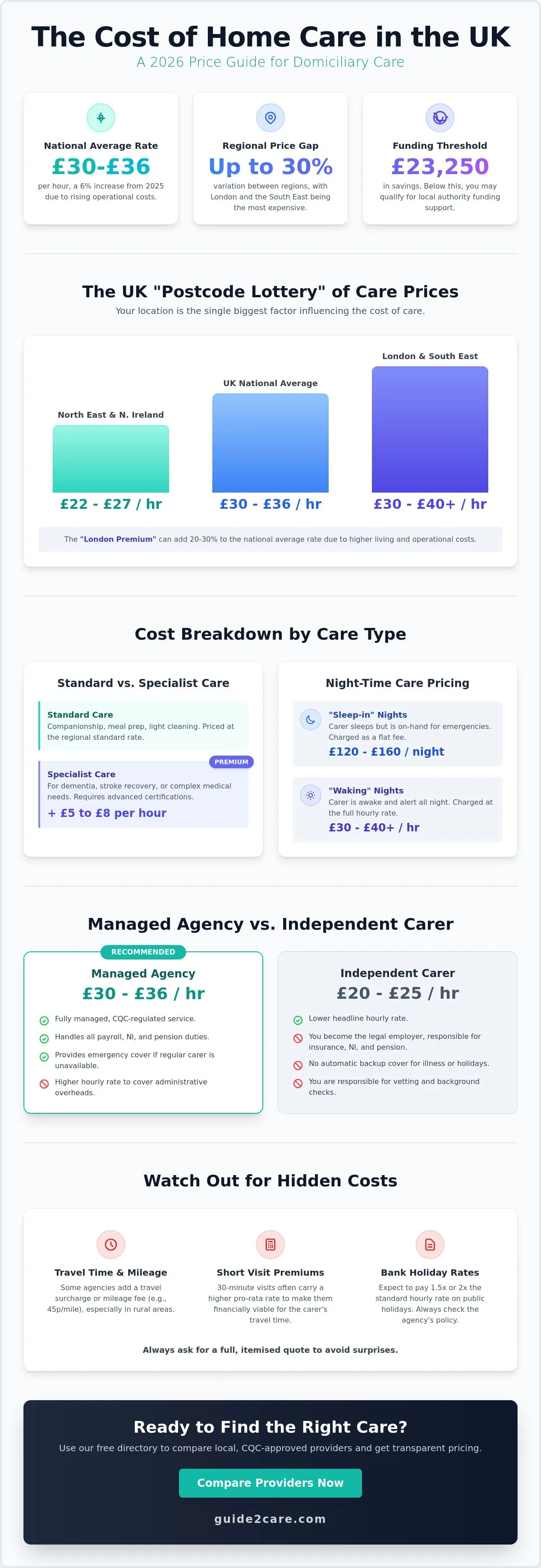
In 2026, the hourly cost of home care uk averages between £30 and £36. These figures represent a 6% increase from 2025 levels, primarily driven by the annual adjustment to the National Living Wage. In London and the South East, rates frequently exceed £40 per hour due to higher operational overheads and staff competition. Understanding these costs is essential for families planning long-term care budgets, and resources such as Het Zorgkabinet offer specialized advice to help individuals navigate these choices and remain in their own homes.
Several factors have shifted the pricing landscape over the last 24 months. The UK care sector faces stricter regulatory compliance requirements from the Care Quality Commission (CQC), necessitating more frequent staff training and robust digital record-keeping. Additionally, fuel inflation and increased employer National Insurance contributions have forced providers to raise their base rates to remain viable. Most agencies now operate on a "fully managed" basis, meaning they take full responsibility for the quality of care and staff vetting.
Standard Care vs. Specialist Care Rates
Basic companionship and domestic help, such as meal preparation or light cleaning, usually sit at the lower end of the price bracket. For those budgeting for regular household maintenance, cleanerconnect.co.uk offers a detailed look at standard cleaning rates. Expect to pay the standard regional rate for these services. Specialist care for dementia, stroke recovery, or complex medical needs carries a premium. These services often cost £5 to £8 more per hour because they require staff with advanced certifications. Night-time care is handled differently; "sleep-ins" often involve a flat fee of £120 to £160, while "waking nights" are charged at full hourly rates for the duration of the shift.
Managed Service vs. Independent Carers
Hiring an independent carer through an introductory agency or a private contract can appear cheaper, with rates often between £20 and £25 per hour. However, this path places the legal burden of employment on the family. You'll be responsible for National Insurance, pension contributions, and public liability insurance. Managed agencies charge higher fees but cover CQC registration, provide emergency cover if a carer is ill, and manage all payroll tasks. For many, the reliability and safety of a managed service outweigh the initial savings of hiring independently.
Regional Variations: The UK Postcode Lottery of Care Prices
Location is the primary factor determining your final quote for care services. Regional price differences occur because of varying labor markets, property costs, and local demand. In 2026, the hourly cost of home care uk continues to show a significant gap between the North and South. London and the South East of England carry a "London Premium," where rates often sit 20% to 30% higher than the national average. In these areas, expect to pay between £30 and £38 per hour for standard domiciliary care. Conversely, regions such as North East England and parts of Northern Ireland often see rates ranging from £22 to £27 per hour.
Travel logistics also influence your bill. Providers in remote areas must account for the time and fuel spent moving between clients. You will often see these costs added as a flat "travel surcharge" or an increased hourly rate to ensure the carer receives a fair wage for their time on the road. Before you sign a contract, compare local providers to see how they structure these regional fees.
Cost Breakdown by Home Nation
Each UK nation operates under different funding and regulatory frameworks. In England, private rates are heavily influenced by the Homecare Association Minimum Price. This guideline helps providers set sustainable fees that cover the National Living Wage, travel time, and regulatory compliance. For 2025-26, this benchmark highlights the rising cost of maintaining high safety standards.
- Scotland: The Free Personal and Nursing Care (FPNC) policy means the government provides a set contribution toward care costs for those who qualify. However, if you choose a private provider for additional hours, you will still pay market rates, which average £28 to £32 per hour.
- Wales and Northern Ireland: These regions often have stricter local authority price caps. While this can keep costs lower for state-funded individuals, private payers may face higher rates as providers seek to balance their budgets. Average 2026 private rates in Wales sit around £25 to £29 per hour.
Urban vs. Rural Pricing Dynamics
City-based care involves high demand and high competition. In major hubs like Manchester, Birmingham, or Leeds, the hourly cost of home care uk is driven by the high cost of living for staff. However, the density of clients in cities often eliminates travel surcharges. In contrast, rural care in counties like Cumbria or Cornwall faces "care deserts" where a shortage of local staff drives up prices. Providers in these areas may charge 45p per mile or more for travel costs.
To manage these costs, look for "borderline" providers. These are agencies located on the edge of a cheaper zone that still service your area. They may offer more competitive rates than agencies based in the heart of an expensive city or a remote village. Always ask for a breakdown of "contact time" versus "travel time" to understand exactly what your hourly fee covers.
Funding Your Care: Local Authority Support vs. Private Pay
Securing financial support for home care requires a clear understanding of the UK's two-stage assessment process. You must first undergo a Care Needs Assessment to determine the level of assistance required. Following this, the local council conducts a financial assessment, often called a means test, to decide who pays for the service. This review evaluates your income and capital to see if you meet the criteria for public funding. Find the care you need by starting this process early.
Navigating these assessments can be complex, but professional guidance can help. For example, Het Zorgkabinet provides expert advice on care applications, helping people secure the support they need to continue living independently at home.
The 2026 financial assessment rules focus on specific capital thresholds. In England, the upper capital limit is £23,250. If your assets exceed this amount, you're usually responsible for the full hourly cost of home care uk as a self-funder. If your assets fall between £14,250 and £23,250, the council provides partial funding. Those with assets below £14,250 typically receive maximum support, though they may still contribute from their weekly income. Use these figures to plan your budget effectively and explore all available options.
The Financial Assessment Process
The council's financial review follows a structured path. They examine your savings, investments, and certain benefits. It's vital to note that your primary home is generally excluded from this assessment when you're receiving care in your own house. This protection allows you to stay in your property while receiving support. If you disagree with a funding decision, you can challenge the outcome through the council's formal appeals process. Provide evidence of high essential expenditure or changing needs to support your case.
- Direct Payments: You can receive your care budget directly into a bank account. This gives you the freedom to choose your own providers and manage the hourly cost of home care uk independently.
- Personal Budgets: This is the total amount the council allocates for your care. You can let the council manage it or take it as a Direct Payment to gain more control over your spending.
Social Care Benefits and Allowances
Several UK benefits are not means-tested and can help offset care expenses regardless of your savings. Attendance Allowance is available to those over state pension age who need help with personal care. It's paid at two different rates based on the level of care required. For those under state pension age, the Personal Independence Payment (PIP) serves a similar purpose. If a family member provides at least 35 hours of unpaid care per week, they might qualify for Carer's Allowance. These payments provide essential financial relief for households managing long-term care needs without affecting other capital assessments.
Hidden Costs: What the Initial Hourly Quote Might Exclude
The headline hourly cost of home care uk often covers the carer's time at your door, but secondary fees can increase the final invoice by 15% to 25%. Understanding these additions prevents unexpected financial strain. Most agencies apply surcharges for out-of-hours care. You should expect to pay a 25% to 50% uplift for weekend visits. Bank holidays, including Christmas Day and New Year’s Day, frequently command double-time rates. Agencies also charge one-off assessment fees. These costs, ranging from £50 to £200, cover the care manager's time to draft the care plan and conduct safety risk assessments.
Travel time is a statutory billing requirement in the UK, ensuring carers receive at least the National Minimum Wage for time spent moving between client appointments. Agencies often bill this as a flat fee per visit, typically between £1.50 and £5.00. Alternatively, they may charge a mileage rate. This rate usually follows HMRC's 45p per mile guideline if the carer uses their own vehicle for the commute or to take you to appointments.
Minimum Call Times and Efficiency
Agencies are moving away from short 15 or 30-minute visits. Most providers now enforce a 1-hour minimum call time to ensure care quality and staff retention. While a 30-minute visit might seem cheaper, the per minute cost is usually 20% higher due to travel overheads. Grouping tasks into fewer, longer visits reduces the total amount spent on travel fees. If your needs exceed 10 hours of daily support, live-in care often becomes a more affordable alternative to the standard hourly cost of home care uk, while platforms like Cleaner Connect can help you find local help for non-medical domestic chores.
Equipment and Consumables
Standard Personal Protective Equipment (PPE) like gloves and aprons is usually included in the agency's hourly rate. You're responsible for specialized medical supplies, incontinence pads, and cleaning materials. To ensure your home is kept to the highest standards, check out Maintain Clean Ltd for premium residential cleaning solutions. Factor in the one-off costs of home adaptations as well. Installing a stairlift or a walk-in shower can reduce the number of care hours required for mobility assistance. This initial investment often lowers your long-term weekly care bill.
How to Find and Compare Home Care Providers
Finding a provider involves more than just comparing the hourly cost of home care uk. Use the Guide2Care directory to streamline your search. You can filter results by location and specific care types, such as domiciliary support or specialist dementia care. This targeted search ensures you only contact agencies capable of meeting your specific requirements.
When you contact a potential provider, ask direct questions about their financial structure. Request a full breakdown of their rates. Ask if they charge higher fees for bank holidays or weekends. Confirm if travel time for carers is included in the quoted price or added as a separate mileage charge. You should also check for minimum call durations. Many agencies require a minimum of 30 or 60 minutes per visit. If you find that your requirements are strictly for household maintenance rather than personal care, you can discover Cleaner Connect to locate professional cleaners in your community.
Always verify the provider's standing with national regulators. In England, check the Care Quality Commission (CQC) website for recent inspection reports. In Scotland and Wales, use the Care Inspectorate. These ratings indicate whether a provider offers value for money. A higher hourly rate is often justified by an "Outstanding" or "Good" rating. Never agree to services without a written contract. This document must include a transparent fee schedule and clear terms for price increases.
Evaluating Provider Quality
The cheapest hourly rate isn't always the best choice for long-term stability. Low prices often suggest low staff wages, which typically leads to high staff turnover. According to 2023 data from Skills for Care, the social care vacancy rate remains high at approximately 9.9%. Choosing a provider with high staff retention ensures consistency for your loved one. Seeing the same carer builds trust and improves the quality of support. Review this What to Look For in a Home Care Provider guide to help you identify high-quality agencies during your search.
Final Steps to Securing Care
Before committing to a long-term arrangement, request a trial period or a "settling-in" week. This allows you to evaluate the carer's performance and the agency's communication without a permanent contract. While the hourly cost of home care uk is a primary factor, the relationship between the carer and the client is equally vital. Schedule a formal review of the care plan and total costs every 6 months. As care needs change, you may need to adjust the frequency or duration of visits to ensure the service remains cost-effective.
For those who may require similar professional medical flexibility while in other regions such as Dubai, you can find out more about Vitals Healthcare’s 24/7 doctor-on-call services, which provide expert care at your doorstep.
Ready to start your search? Find the care you need today with the Guide2Care directory.
Plan Your Home Care Budget for 2026
Navigating the hourly cost of home care uk involves more than just comparing base rates. By 2026, regional price variations remain a significant factor, with costs in the South East often exceeding the national average due to higher staffing overheads. It's essential to look beyond the headline figure and account for hidden charges such as weekend premiums or provider travel time. Checking your status against the latest local authority funding brackets ensures you don't miss out on financial support you're entitled to receive. Clear planning prevents unexpected bills and keeps your long-term care sustainable; to help you navigate these financial complexities, discover Het Zorgkabinet for expert advice on care applications.
Guide2Care simplifies this process by providing a comprehensive UK-wide directory of registered providers. Our platform offers neutral and impartial guidance on care funding, fully updated for 2026 regulatory standards. You can filter options by location and service type to find a provider that fits your specific financial and medical needs. Start your search today to secure reliable support for yourself or a loved one. Find The Care You Need in our UK Directory. You've got the tools to make an informed decision for the future.
Frequently Asked Questions
What is the average hourly cost of home care in the UK in 2026?
The average hourly cost of home care uk in 2026 is projected to range between £30 and £38 per hour. These rates vary depending on your specific location and the level of specialist support you need. Regional differences are significant; costs in London and the South East often exceed the national average by 15% or more due to higher operational overheads.
Will the local council pay for my home care if I have savings?
Your local council won't pay for your home care if your capital and savings exceed £23,250. This threshold applies in England for the 2025/26 period. If your assets are below £14,250, the council pays for your care, though you may contribute from your weekly income. For savings between these two figures, you pay a tariff income of £1 for every £250 of savings you own.
Is home care cheaper than a residential care home?
Home care is generally cheaper than residential care if you require fewer than 30 hours of support per week. Average residential care costs in the UK currently exceed £800 per week, while nursing care can surpass £1,200. If you only need a few hours of help daily, domiciliary care provides a more cost-effective solution than moving into a full-time facility.
Do I have to pay for my carer’s travel time?
You usually pay for a carer's travel time as it's factored into the agency's total bill. While some agencies charge a separate per mile fee, most incorporate travel costs into the standard hourly cost of home care uk. It's important to check your service agreement for hidden call-out fees or travel surcharges before you sign a contract with a new provider.
Can I get Attendance Allowance to help with home care costs?
You can claim Attendance Allowance to help cover home care costs if you're over State Pension age and have a disability or long-term illness. For the 2024/25 tax year, the lower rate is £72.65 and the higher rate is £108.55 per week. This benefit isn't means-tested, so your savings or annual income won't affect your eligibility or the amount you receive.
What happens if the cost of my care increases?
Care agencies typically increase their rates every April to coincide with National Living Wage adjustments. Your provider must give you a formal notice period, usually 28 days, before any price change takes effect. If the cost becomes unaffordable, request a new financial assessment from your local council to see if you qualify for increased state funding or local authority support.
Are there different rates for weekend or bank holiday care?
Most agencies charge higher rates for care provided on weekends and bank holidays. Weekend rates often increase by 10% to 25%, while bank holiday care is frequently billed at double the standard hourly rate. You should ask for a full price list that details these enhanced rates to avoid unexpected costs in your monthly care invoice.
How do I find a CQC-registered home care agency near me?
Use the Care Quality Commission (CQC) online directory to find registered home care providers in your specific postcode. The CQC inspects every agency and provides ratings like Outstanding or Good. You can also browse the Guide2Care directory to compare local providers and view their latest inspection reports. This ensures the agency meets legal standards for safety and quality.