Preparing for a CQC Inspection in 2026: The Provider’s Complete Guide

The Care Quality Commission aims to complete 9,000 assessments by September 2026, which means your next review is likely closer than you think. You likely find the Single Assessment Framework complex and worry about how a poor rating could impact your business viability. Preparing for a CQC inspection is no longer a two week sprint; it's a continuous process of gathering evidence across 34 Quality Statements. This guide helps you master the current requirements and ensures your service is ready to demonstrate excellence to inspectors.
You'll learn how to engage your staff in compliance and reduce the pressure on your management team. We've simplified the complex data requirements into an actionable preparation checklist designed to help you achieve a "Good" or "Outstanding" rating. This article breaks down the six evidence categories. It explains how to align your daily operations with regulatory expectations before the new sector specific frameworks arrive at the end of 2026. Follow these steps to organize your evidence and secure your service's reputation.
Key Takeaways
- Master the Single Assessment Framework and the five key questions to align your service with current regulatory standards.
- Use the digital Provider Portal to manage the six evidence categories and simplify the process of preparing for a CQC inspection.
- Implement mock inspections to build a culture of compliance and ensure your staff feel confident when speaking with inspectors.
- Create a structured 14 day plan to handle inspection logistics and organize your physical or digital evidence rooms.
- Learn how to manage the Factual Accuracy Challenge process to ensure your final report and rating accurately reflect your service quality.
Understanding the CQC Single Assessment Framework in 2026
The Care Quality Commission (CQC) now uses the Single Assessment Framework (SAF) as its unified regulatory model. This framework applies to all providers, including adult social care, primary care, and hospitals. It replaces the previous siloed approach with a single set of expectations. By 2026, the CQC has transitioned away from the traditional model of periodic, onsite inspections. Instead, the regulator uses a continuous assessment model. This means your rating can change based on data and evidence gathered throughout the year, even without an inspector visiting your premises.
To better understand how these changes impact your practice, watch this helpful video:
Preparing for a CQC inspection in 2026 requires a shift in mindset. Treat compliance as an ongoing operational requirement rather than a deadline-driven event. The CQC is on track to complete 9,000 assessments by September 2026, so your service must remain inspection-ready at all times. This proactive approach relies on the five key questions and the 34 Quality Statements that now define excellence in care.
The 5 Key Questions: What Inspectors Look For
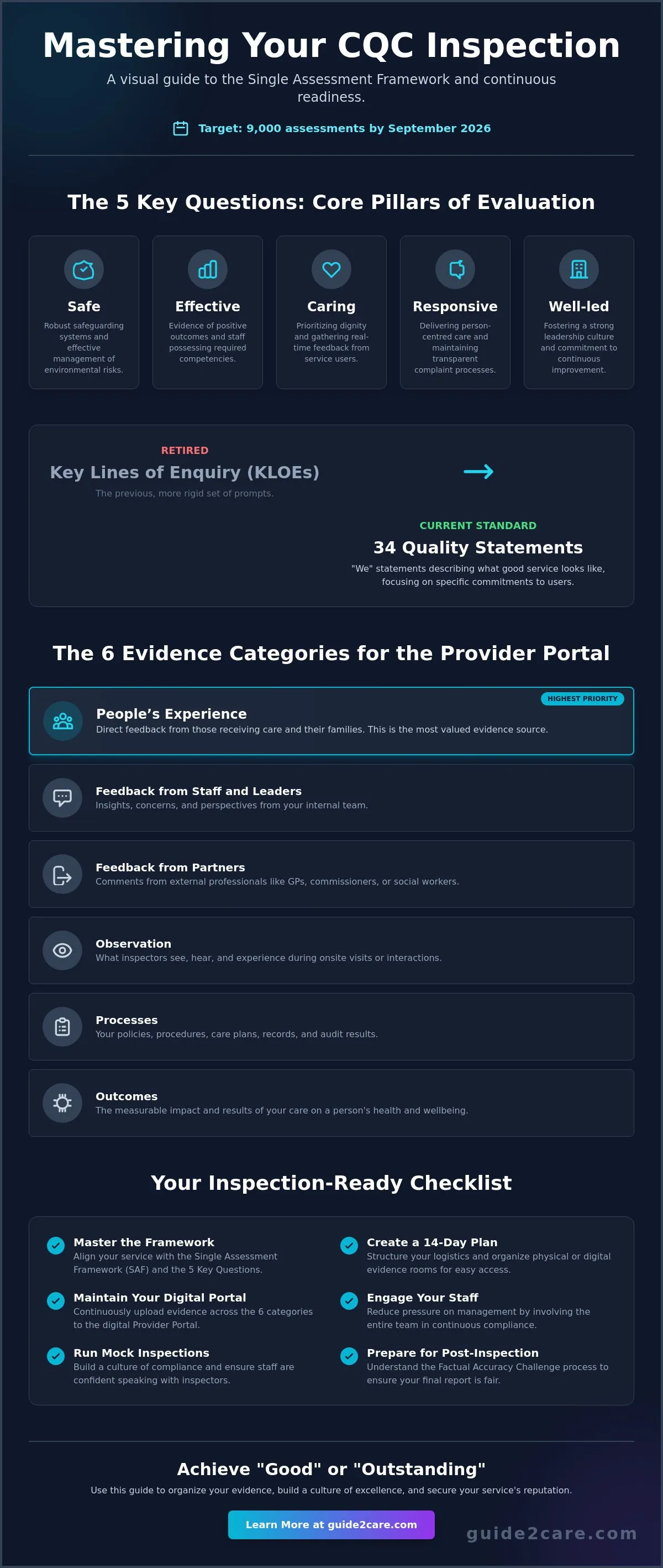
The CQC continues to evaluate services based on five core pillars. Each pillar focuses on specific outcomes for people using your service. Review these categories regularly to ensure your service meets the required standards:
- Safe: Focus on robust safeguarding systems and evidence that you manage environmental risks effectively.
- Effective: Provide evidence of positive outcomes and demonstrate that your staff possess the required competencies.
- Caring: Prioritize dignity and gather real-time feedback from service users.
- Responsive: Deliver person-centred care and maintain a transparent process for handling complaints.
- Well-led: Foster a strong leadership culture and show commitment to continuous improvement through regular audits.
Quality Statements vs. KLOEs
The CQC has retired the Key Lines of Enquiry (KLOEs). In their place, they've introduced Quality Statements. These are "we" statements that describe what a good service looks like. They simplify your goals by focusing on specific commitments your service makes to its users. While the SAF is currently the standard, new sector-specific frameworks will arrive in late 2026. For now, map your current policies directly to the 34 Quality Statements. Identify which statements apply to your specific care setting to help you prioritize evidence gathering. Use your internal audits to check if your daily actions match these commitments. This mapping exercise is a critical step when preparing for a CQC inspection.
The 6 Evidence Categories: Building Your Digital Provider Portal
The CQC organizes all evidence into six specific categories to ensure a consistent assessment across different service types. These categories provide the structure for your submissions through the CQC Provider Portal. This digital platform is the primary tool for continuous assessment in 2026. You must maintain an active and updated portal profile to demonstrate ongoing compliance. The six evidence categories include:
- People’s experience: Feedback from those receiving care and their families.
- Feedback from staff and leaders: Insights from your internal team.
- Feedback from partners: Comments from external professionals like GPs or social workers.
- Observation: What inspectors see during onsite visits.
- Processes: Your policies, records, and audit results.
- Outcomes: The measurable impact of your care on a person's health and wellbeing.
The CQC places the highest value on "People’s Experience." Inspectors prioritize the lived experience of service users over your internal documentation. You must implement robust systems to capture this feedback regularly. If you want to highlight your service's reputation and positive feedback to prospective clients, consider utilizing directory listings for care providers to build external trust. For the "Processes" category, ensure your digital records are organized. Uploading up-to-date policies and recruitment logs to the portal is a vital part of preparing for a CQC inspection.
Gathering Feedback from Staff and Partners
Meaningful staff engagement is a regulatory requirement. Conduct regular, anonymous staff surveys to identify cultural issues or safety concerns. Document the results and show the specific actions you took in response. Don't forget to gather evidence from external partners. Request testimonials from local authorities and visiting health professionals. These third-party validations carry significant weight during the assessment process. Clearly display your whistleblowing policy and ensure every staff member understands how to use it. Documenting that staff feel safe to speak up is essential for a "Well-led" rating.
Documenting Outcomes and Clinical Audits
In 2026, the focus has shifted from "completing an audit" to "demonstrating the learning." You must show a closed-loop process where audit findings lead to specific improvements. Use digital care records to track "live" outcome data. Monitor key clinical indicators such as weight loss, falls, and the prevalence of pressure sores. If you identify a negative trend in falls, document the environmental changes or staff training you implemented to reduce the risk. High-quality outcome data provides the objective proof inspectors need to verify that your service is effective and responsive. Use these metrics to drive your continuous improvement plan throughout the year.
Preparing Your Staff and Service Culture
Compliance is a culture, not a chore. If your team views regulatory requirements as an administrative burden, they'll struggle during an assessment. You must embed quality standards into daily routines. This shift ensures that preparing for a CQC inspection becomes a natural part of the job rather than an annual panic. Start by communicating your service’s vision and values clearly. Every staff member, from the domestic team to senior management, must understand how their specific role contributes to these goals. Use team meetings to discuss the Quality Statements and what they mean for individual care tasks. This approach moves compliance from the office to the front line.
Conducting Effective Mock Inspections
Mock inspections are essential tools for reducing staff anxiety. You can choose between using an external consultant or an internal peer-review system. Both methods offer value. Internal reviews build transparency, while external consultants provide an impartial perspective. Focus heavily on "The Walkthrough." Consider what a visitor sees in the first five minutes of entering your service. Check for cleanliness, visible signage, and the general atmosphere. Document every finding in a formal Action Plan. Assign clear deadlines for addressing any gaps found during the exercise. This documented trail proves to the CQC that you're proactive in identifying and fixing issues. It shows the leadership is committed to continuous improvement.
Empowering Staff for Interview Day
Empower your staff to speak confidently on interview day. Carers and support workers often feel intimidated by inspectors. Brief them on common questions regarding safeguarding, person-centred care, and incident reporting. Encourage the use of "I" and "We" statements. For example, a carer should say, "I follow this specific care plan," rather than "Management tells me what to do." This demonstrates ownership and individual competency. Provide simple "Crib Sheets" for key facts. These should include the name of the Safeguarding Lead, the location of the whistleblowing policy, and recent service improvements. When staff feel prepared, they project the confidence that inspectors associate with a well-led service. Clear communication from your team is the best evidence of a positive workplace culture.
Logistics of the Inspection Day: A Step-by-Step Timeline
Receiving a notification letter triggers a critical 14-day countdown. This period is your final window to ensure all operational systems are functioning correctly. Preparing for a CQC inspection during this time requires a focus on logistics and evidence accessibility. Designate a specific "Inspection Room" for the visiting team. This space should be quiet and private. It must contain either physical copies of essential records or a dedicated computer terminal with guest access to your digital care systems. Verify that all passwords work and that guest accounts have the necessary permissions to view care plans and staff files.
The Registered Manager serves as the primary point of contact throughout the process. They are responsible for delivering the introductory presentation. Keep this session focused and brief, ideally lasting no more than 30 minutes. Use this time to highlight service improvements and positive outcomes achieved since your last assessment. Present data that proves you've addressed previous regulatory gaps. To maintain your service's visibility and professional reputation during these transition periods, you can explore advertising partnerships for care providers to reach a wider audience.
The First 48 Hours After Notification
Confirm the names of the inspection team and their specific areas of expertise immediately. This helps you identify which staff members are best suited to provide detailed answers in those areas. You face a strict 5-day deadline to upload requested evidence to the CQC Provider Portal. Prioritize this task to avoid any delays in the assessment process. Communicate the news to residents and their families quickly. Explain the purpose of the visit and inform them that inspectors might request private interviews. This transparency builds trust and ensures service users feel included in the process.
Managing the On-Site Visit
The site walkthrough usually happens shortly after the inspectors arrive. They will pay close attention to safety and hygiene, specifically checking Infection Prevention and Control (IPC) standards. Ensure all communal areas are clutter-free and that staff follow correct hand-hygiene protocols. You must facilitate private interviews by providing a dedicated space where inspectors can speak with staff and residents without being overheard. At the end of the day, attend the feedback session. Take detailed notes on every point the inspectors raise. Ask for immediate clarification if any "areas of concern" are mentioned. Understanding these points early allows you to begin gathering additional evidence or planning corrective actions before the draft report arrives.
Post-Inspection: Using Your Rating to Grow Your Service
The inspection process continues after the inspectors leave your premises. You will receive a draft report outlining the initial findings and proposed ratings. Review this document immediately to ensure it accurately reflects your service. Preparing for a CQC inspection involves managing this post-visit phase with the same level of detail as the site visit itself. Once the CQC publishes your final report, use the results to build trust with your local community. A positive rating serves as objective proof of your commitment to high-quality care and operational excellence.
Update your digital presence as soon as the final rating is confirmed. Install the latest CQC widget on your website to provide visitors with immediate access to your report. Share the news with your staff, residents, and their families to celebrate the collective effort. If you want to leverage your success to reach more families, consider advertising partnerships for care providers to highlight your achievements. Use your rating as a cornerstone of your marketing strategy to differentiate your service from competitors in the area.
The Factual Accuracy Challenge (FAC) Process
You have a strict 10-day window to respond to the draft report through the Factual Accuracy Challenge (FAC) process. Focus on identifying clear errors of fact rather than debating differences of professional opinion. For example, if the report claims a specific policy was missing but you have evidence it was provided, document this clearly. Provide dated evidence to support every challenge you submit. If the draft report contains significant inaccuracies that could lead to an unfair rating, you may need to seek professional legal advice. Ensure your response is concise and evidence-led to increase the likelihood of the report being amended.
Maximising Visibility with Guide2Care
Online directories are primary search tools for families seeking care services. Ensure your profile reflects your most recent CQC success to maximize your reach. High ratings improve your search ranking on directory platforms, making your service more visible to prospective residents. Update your profile description, upload your new rating certificate, and highlight specific areas where you achieved "Outstanding" results. Promote your "Good" or "Outstanding" rating by listing your service on Guide2Care today. This visibility converts your regulatory success into a practical tool for business growth. Consistent effort in preparing for a CQC inspection ensures that your public-facing information remains positive and authoritative.
Securing Your Service’s Future through Continuous Compliance
Successful management in 2026 requires moving beyond the traditional inspection cycle. You must embrace the Single Assessment Framework as a permanent operational standard rather than a temporary hurdle. By mastering the six evidence categories and maintaining your digital Provider Portal, you ensure your service remains ready for the CQC’s continuous assessment model. Preparing for a CQC inspection is most effective when you embed these standards into your daily culture and empower your staff to demonstrate their expertise.
Once you achieve your desired rating, use that success to drive growth. Guide2Care offers comprehensive UK-wide directory coverage and connects your service with a targeted audience of families and local authorities. You can also access our expert resources for care providers to stay informed about ongoing regulatory shifts. List your care service on Guide2Care to reach more families and showcase your commitment to excellence. Your proactive approach to compliance protects your business viability and ensures the best outcomes for those in your care. You have the tools to lead your service to a "Good" or "Outstanding" future.
Frequently Asked Questions
How much notice does the CQC give for an inspection in 2026?
The CQC typically provides 14 days of notice for a planned assessment. You'll receive a notification letter that outlines the scope of the review and the specific evidence you must provide. Some services may receive shorter notice or unannounced visits if the regulator identifies urgent safety concerns or receives whistleblowing alerts. You must upload requested documents to the Provider Portal within five days of receiving your notification.
What is the most common reason for a "Requires Improvement" rating?
Weak governance and a lack of evidence regarding continuous learning are the most frequent causes for a "Requires Improvement" rating. Many providers fail to show a closed loop between identifying an issue in an audit and implementing a verified solution. If you don't document the specific actions taken after an incident, inspectors cannot verify that your service is safe or well-led. Robust record-keeping is vital for a higher rating.
Do I still need a paper "Provider Information Return" (PIR)?
No, the CQC has replaced the traditional paper PIR with a digital-first submission process through the Provider Portal. You're now expected to provide information and data on an ongoing basis rather than completing a single annual form. This shift supports the continuous assessment model used in 2026. Maintaining an updated digital profile is a primary task when preparing for a CQC inspection to ensure your data is always current.
What happens if I disagree with the CQC inspector’s findings?
You can challenge the findings through the Factual Accuracy Challenge (FAC) process after receiving your draft report. You have a 10-day window to submit evidence that corrects errors of fact or clarifies misunderstood information. This process is strictly for correcting factual mistakes rather than debating the inspector's professional judgment. If the FAC does not resolve the issue, you may need to follow the formal complaints or ratings appeal procedure.
How often will my care service be inspected under the new framework?
Inspection frequency is no longer based on fixed calendar intervals. The CQC uses a risk-based approach where your assessment schedule depends on the "live" data you submit and feedback from service users. If your data indicators remain stable and positive, you may experience longer periods between onsite visits. Conversely, any decline in performance metrics or an increase in negative feedback can trigger an immediate assessment of your service.
Can the CQC inspect my service remotely without visiting?
The CQC frequently conducts remote assessments as part of its continuous monitoring strategy. Inspectors review your submitted processes, staff surveys, and partner feedback through the digital portal without always being physically present. While remote reviews are common, the "Observation" evidence category still requires onsite visits. You should expect a mix of remote data monitoring and targeted onsite inspections to verify that your physical environment meets safety standards.
What are the 6 evidence categories used in CQC assessments?
The framework utilizes six categories: People’s experience, Feedback from staff and leaders, Feedback from partners, Observation, Processes, and Outcomes. This structure ensures that inspectors gather a 360-degree view of your service quality. Preparing for a CQC inspection requires you to organize your evidence into these specific buckets. This organization helps you identify gaps in your data, such as a lack of recent testimonials from external health professionals or partners.
How do I prepare for a CQC "Well-led" assessment?
Focus on demonstrating a transparent leadership culture and robust governance systems. You must show that you have a clear vision and that every staff member understands their role in achieving it. Provide evidence of regular audits and document the specific improvements made as a result of those findings. A well-led service encourages staff to speak up and shows a commitment to equality, diversity, and inclusion at all levels of management.